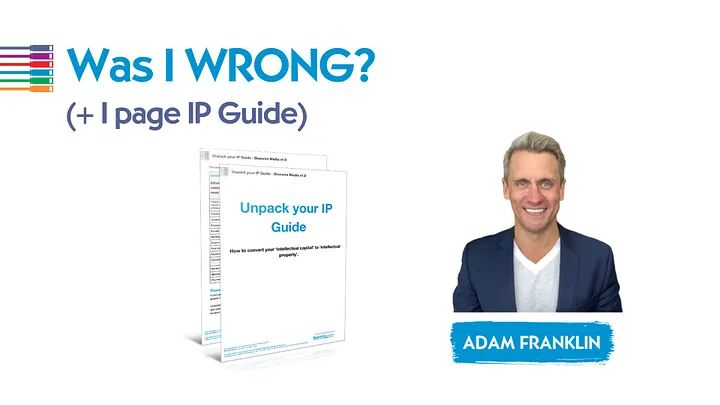
I had a few readers respond about the difference between a consultant and a subject matter expert.
Hat tip to John Groarke, mentor to consultants in Sydney, who replied promptly saying:
I clicked on your email as soon as I saw the subject line, because there is significant market confusion over the consultant word and the contractor word, and interestingly I rarely see the subject matter expert phrase. Unfortunately, I passionately believe you have added to the confusion. It is my humble opinion that your consultant is my contractor, and your subject matter expert is my consultant.
Fabulous. I enjoyed this exchange because it has helped me tighten up my language and definitions.
I agree it's probably more helpful and accurate to group these roles together with the following definitions:
- Consultant, also known as subject matter expert, brings IP to the table.
- Contractor, also known as freelancer, is an extra set of hands.
It's not perfect but I hope I have done it justice. What do you think?
Anyway, John and I both agreed that the real point is that if you want to be paid handsomely, what you are worth, then you need to bring IP and smarts to the table rather than just an extra set of hands.
Where the IP goes next
The great thing about unpacking your IP, aside from being a true subject matter expert and getting paid more, is that you can then load that IP into a custom GPT.
A custom GPT can serve as a digital version of you with all your knowledge and insights, which can then help you create content, write emails, brainstorm ideas and do just about anything you can imagine.
I've built a custom "AI Adam" GPT and it's literally my virtual right-hand person. I ask it questions all the time and just yesterday it gave me 20 content ideas for videos to record, wrote draft emails for me, and provided a list of questions my ideal clients have. It's incredible.
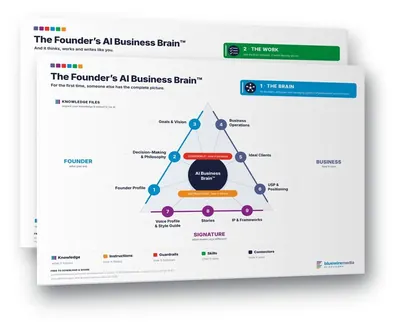
Want what is in your head to keep working when you are not? The Founder's AI Business Brain template is how you get it out of your head and into something that thinks, writes and works like you. Free to download.