Two books are mandatory reading at Tony Hsieh's phenomenal company Zappos.com: Good to Great and Tribal Leadership.
Most business owners have read Jim Collins' classic Good to Great, but I hadn't heard of Dave Logan's Tribal Leadership until recently.
Tribal Leadership overview
The authors describe tribes as comprising of 20-150 people, and the culture of each tribe can be categorised as Stage 1 to Stage 5.
Stage 1: Life sucks
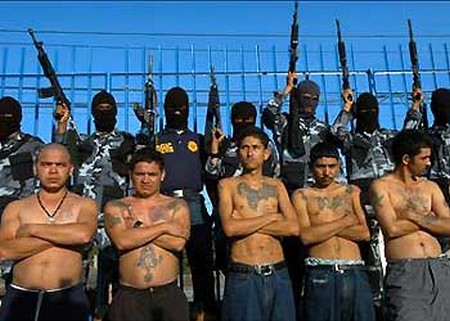
People here feel alienated from others. They are isolated, hostile, desperate and violent. It is the culture of gangs and prisons.
Stage 2: My life sucks (25% of corporate cultures)
People here realise that other people's lives are working, but theirs isn't. They feel they lack the power that others have and are apathetic victims of circumstance.
They are disconnected, disengaged and feel that they work for idiot bosses.
Stage 3: I'm great (and you're not) (48% of corporate cultures)
This stage is characterised by personal accomplishment and outward signs of success. Yet people at Stage 3 have a deep craving for more esteem, respect, loyalty and legacy. Their language is full of "I", "me", "my" and their identity is focused on personal achievements, for example "I've got an MBA", "I'm the one holding this place together", "I'm the boss".
Knowledge is power, so the only way to stay on top is to hoard information. People at Stage 3 like to make all the decisions and everyone's got to earn their trust. Many people at Stage 3 mistakenly believe they are at Stage 4 or 5. And people don't go beyond Stage 3 until they have a personal epiphany that there has to be a 'better way'.
They realise the only path to true success is via tribal victories, not personal victories.
Stage 4: We're great (and others aren't) (10% of corporate cultures)
The betterment of the tribe is the real goal here. The language is repeatedly "we're", "we", "us" and the focus is on the tribe. When there are successes the leader shines the light on the tribe, and when there are failures the leader takes personal responsibility.
Trust is assumed and knowledge is over-communicated. There are shared core values and a united culture. The key distinction is the formation of 3 person relationships called triads, where members of the tribe work together to reach decisions.
Compare this to Stage 3s who operate with lots of 1-on-1 relationships where they control (hoard) the information, make all the decisions and believe that 'they're the glue that holds this place together'.
People at Stage 4 work much less but get much more effective results. And they garner respect, loyalty and admiration from their tribes.
Stage 5: Life is great
Truly groundbreaking stuff happens when you're at Stage 5.
At this level it's not about your tribe beating your competition, it's about changing the world.
Apple transforming the music, computer and phone industries is an example of a Stage 5 culture. You are making history!
Stage 5 is rare but it's what we need to aspire to.
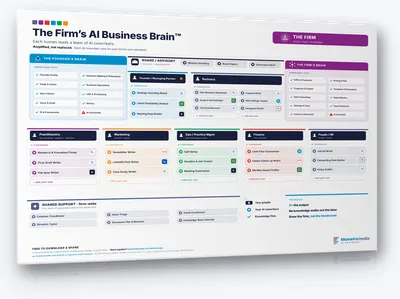
You have probably worked out how AI helps you. The Firm's AI Business Brain template is the one-page map for giving everyone else in the firm the same thing, every role and the AI coworkers under it. Free to download.