As a professional services business owner, there are two halves to getting AI working well in your business.
So the first half is the AI brain, the part that has the context and the thinking that is capable of doing the work. Then of course is the second part, which is the other side, which is essentially the hands, the hands that are tapping the keyboard and getting the work done.
Now both sides are equally important, and you don't really want one without the other.
What happens if you have the hands but no brain?
If you just have the hands but no brain, you're getting a very generic output, same as everybody else, and it has no context as to how you do what you do. So all those decades of experience and that nuance and everything else that goes into your work is left off the table.
What happens if you have the brain but no hands?
Now the flip side is, if you've got a very capable and complex AI brain that knows everything about you and knows all that context, but you never actually give it any work to do, it's just a very expensive online filing cabinet.
So you need to get the balance right between the two.
So the fun part is normally seeing it do the work. But the important part first is actually unpacking the thinking that goes into your work.
How do you build the AI brain?
I like to do a bit of both. So generally, when I'm with a client working on the AI brain and unpacking that knowledge, I recommend you just talk to your computer and tell it a little bit about yourself, your ideal client, your business, your products, your services, and all of that.
Or just dump in files if you've got them already. Maybe marketing stuff that you've done in the past, or company profile sheets, or whatever else that basically gives Claude that understanding of what it is you do, who you serve, and how it all works.
How do you get the hands working?
Then when it comes time to doing the work, instead of you tapping away on your keyboard, the beauty is that Claude can do this.
Now I like Claude Cowork. It is purpose-built for this type of thing, particularly for complex work that's multi-step and that would normally maybe take you one, two or three hours. With the right skills and the right workflows, Cowork can handle this really quickly. And not just admin work. I'm talking complex, high-level strategic thinking work that accountants, lawyers, property specialists and medical specialists all do.
So to get the skills right, or get the hands working properly, what we ideally do is actually work through that task with Claude. So it knows exactly every little thing that you do. It understands why you do every little thing that you do, so that it can bottle that and put it in a process and turn it into a set of instructions. Then next time you want to do it, it understands all that nuance.
So you've got the highly capable hands doing the work, tapping the keyboard, and it's pre-programd with the smarts from your head and from your computer. So, the brain and the hands. With that combination you will really unlock the magic of Cowork.
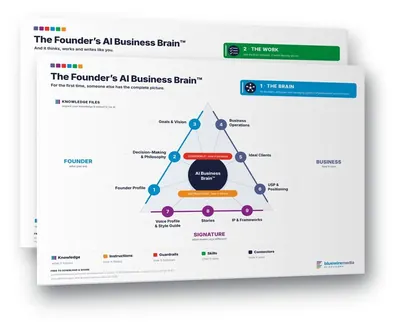
Want the AI starting from your thinking? The Founder's AI Business Brain template is how you get what's in your head into something that thinks, writes and works like you. Free to download.
Frequently asked questions
What is an AI brain?
The AI brain is the context and thinking layer. It's everything the tool knows about you, your ideal client, your business, your products and services, and the way you do your work. Without it, AI has no context as to how you do what you do, so the output is generic.
What are the AI hands?
The hands are the part that actually does the work, tapping the keyboard and producing the output. Claude Cowork is purpose-built for this, particularly for multi-step work that would normally maybe take you one, two or three hours.
Why do generic AI outputs happen?
Because you've given the tool hands but no brain. With no context about how you do what you do, the output is the same as everybody else's, and decades of your experience and nuance are left off the table.
Can AI do more than admin work for professional services firms?
Yes. With the right skills and workflows it handles complex, high-level strategic thinking work of the kind accountants, lawyers, property specialists and medical specialists do, not just the admin around it.
How do you teach AI the nuance in your work?
Work through the task with it rather than handing it over. When it sees every little thing you do and understands why you do it, it can bottle that into a process and a set of instructions, so next time it already understands the nuance.
Where should you start, the brain or the hands?
A bit of both, but unpack the thinking first. The fun part is seeing it do the work, but the important part first is unpacking the thinking that goes into your work.