I've always had a fascination with the psychology of human behaviour, especially the irrational.
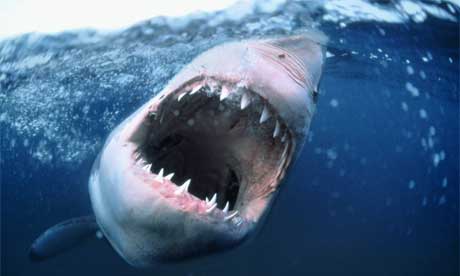
For example, why are we so scared of sharks? But why aren't we scared getting into a vehicle?
Yet we average 300 road fatalities per year (in Queensland), and average 0.45 shark attack fatalities per year (in Queensland). You are 650 times more likely to die on the road than by a shark attack.
Stats like this intrigue me. And so does the behaviour it contributes to.
When my brother Ross Franklin, an economist at KPMG, put me onto Dan Ariely's book Predictably Irrational, I couldn't put it down.
This experiment hooked me. Ask yourself, which would you choose?
Web subscription, $59.00. One year subscription to Economist.com. Plus online access to all articles since 1997. Print subscription, $125.00. One year subscription to the print edition of the Economist. Print & Web subscription, $125.00. One year subscription to the print edition of the Economist. Plus online access to all articles since 1997.
What typically happens?
- 16% chose Web (option 1)
- No-one chose Print (option 2)
- 84% chose Print & Web (option 3)
Yet what happens if you remove option 2 (that no-one chose)? Which would you choose now?
Web subscription, $59.00. One year subscription to Economist.com. Plus online access to all articles since 1997. Print & Web subscription, $125.00. One year subscription to the print edition of the Economist. Plus online access to all articles since 1997.
What happened now?
- 68% chose Web (option 1)
- 32% chose Print & Web (option 2)
What a change in behaviour. Why is this?
It turns out that the Print subscription is a 'decoy'. The decoy is designed simply to make option 3 look more appealing.
In our (irrational) mind, since option 2 and 3 are so similar, it leads our brain to choose between Print and Print & Web. Since both cost $125, you obviously choose Print & Web.
In scenario two, where there is no decoy, the choice you must make is vastly different. There's no 'similar' option to compare with. And this means our behaviour is vastly different.
Put simply, given three choices:
- A
- B (very distinct, but equally as attractive as A)
- A- (similar to A, but inferior)
We will almost always choose A, because it is clearly superior to A-.
Thanks must go to Ian Lyons, who originally explained this theory to me at the EMSA conference dinner at the Gold Coast a few years ago.
Lesson to learn: be aware of how persuasive pricing can be. Whether you are the buyer or the marketer, it's useful to know how our irrational minds work.
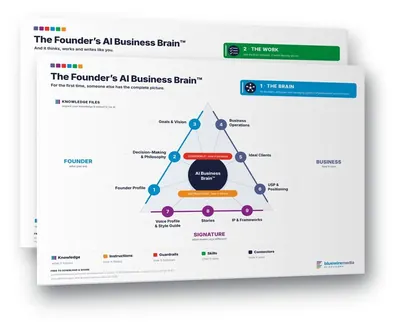
Want what is in your head to keep working when you are not? The Founder's AI Business Brain template is how you get it out of your head and into something that thinks, writes and works like you. Free to download.